Best EV Chargers for Home (2026 Guide)
Before you spend $400–$900 on a Level 2 charger, here’s what most EV owners get wrong.
- Buying a charger that doesn’t match your breaker panel
- Overpaying for amps they can’t use
- Not understanding hardwired vs plug-in
- Ignoring weather rating
- Choosing speed over safety
This guide breaks down exactly what matters so you install once — and charge right.
What Is a Level 2 EV Charger?
- Runs on 240V (dryer outlet style or hardwired)
- Charges 6–10x faster than Level 1
- Ideal for daily home charging
Most EV owners upgrade to Level 2 within the first year once they realize Level 1 overnight charging isn’t practical long term.
40A vs 48A — What Actually Matters?
- 40 Amp = ~9.6 kW
- 48 Amp = ~11.5 kW
- 48A models are typically hardwired
- 40A models commonly support NEMA 14-50 plug installs
The real question isn’t “Which is stronger?”
It’s “What can your electrical panel support?
Choosing the wrong amperage is one of the most common reasons homeowners end up paying for unexpected electrical upgrades.
| Model | Power | Plug Type | WiFi | Best For |
|---|---|---|---|---|
| EVIQO 40A | 9.6kW | NEMA 14-50 | Yes | Plug-and-play installs |
| EVIQO 48A | 11.5kW | Hardwired | Yes | Faster home charging |
| WOLFBOX 48A | 11.5kW | Hardwired | Yes + RFID | Smart control & outdoor |
We selected these models based on installation flexibility, power stability, safety certification, and long-term user feedback — not just peak output claims
All three models maintain strong customer satisfaction ratings and consistent performance feedback across multiple EV owner communities.
All three chargers are UL / ETL certified and compatible with most North American EVs using J1772 connectors.
Quick Decision Shortcut
• Have a 14-50 outlet already? → Choose the 40A
• Want fastest charging possible? → Choose a 48A
• Need smart access control? → Choose WOLFBOX
Best Plug-In Option
EVIQO 40A Level 2 Charger
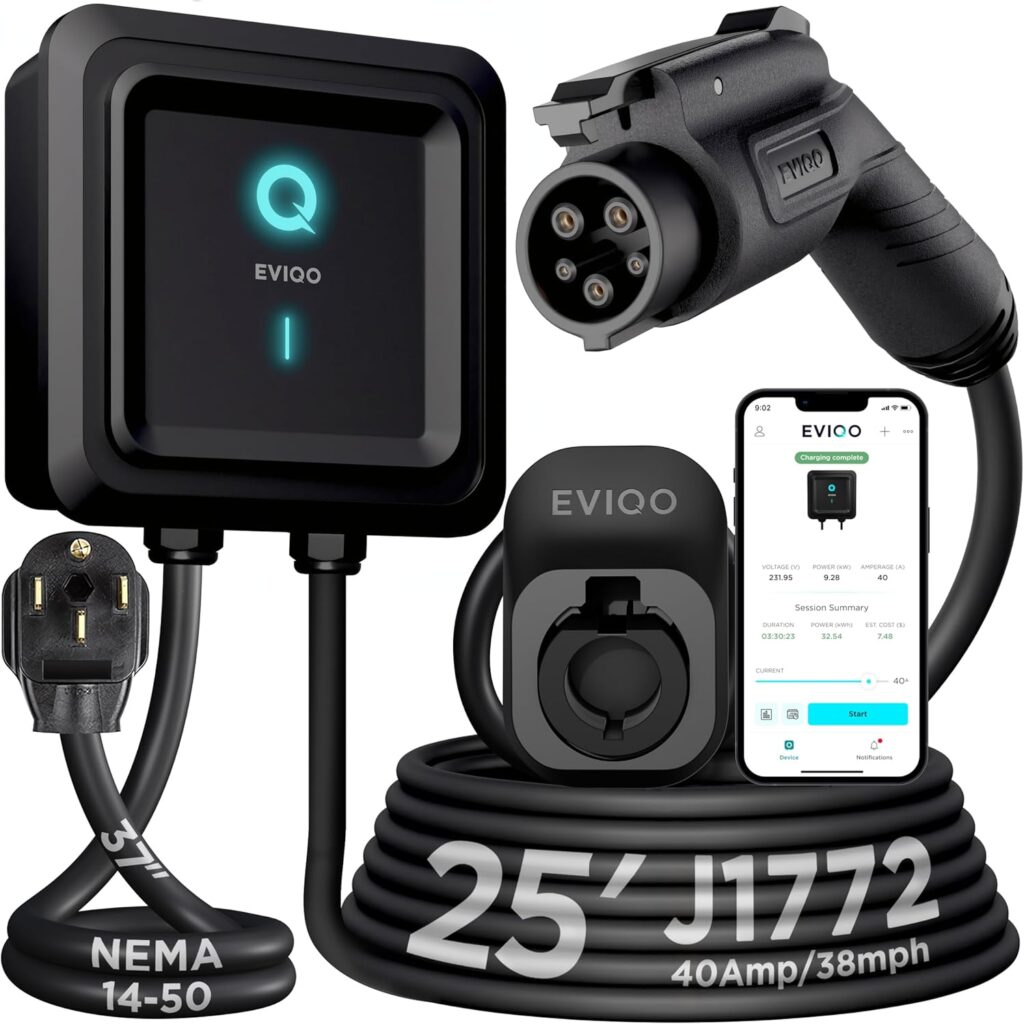
Why people buy it:
- NEMA 14-50 plug (no electrician needed in many cases)
- Strong 9.6kW output
- WiFi enabled
- UL / ETL certified
Who it’s for:
- Homeowners with existing 14-50 outlet
- First-time EV charger install
- Renters who need flexibility
Who Should Avoid This
Avoid this model if your vehicle has a very large battery pack and you want maximum overnight speed.
Bottom Line:
This is the safest starting point for most homes.
If your setup matches the 40A criteria above, this is the safest choice to install without overcomplicating your panel.
👉 Check Current Price on Amazon
EV charger pricing fluctuates seasonally, especially before winter demand and rebate program changes.

Best Hardwired Power Option
EVIQO 48A Level 2 Charger
Why people buy it:
- Faster charge rate (11.5kW)
- Strong cable build
- Clean design
- Stable WiFi app
Who it’s for:
- Larger battery EVs
- Homes upgrading panel anyway
- Owners planning long-term install
Who Should Avoid This
Avoid this model if your panel cannot support a 60A breaker without upgrade.
Bottom Line:
If your panel supports it, 48A future-proofs your setup.
👉 Check Current Price on Amazon
Best Smart Feature Option
WOLFBOX 48A Level 2 Charger
Why people buy it:
- RFID card access
- Smart display
- Outdoor-ready
- Modern interface
Who it’s for:
- Shared garages
- Driveway installs
- Users wanting more control visibility
Who Should Avoid This
Avoid this if you don’t need RFID access or smart features and just want basic charging.
Bottom Line:
This is the most feature-rich option in this price range.
👉 Check Current Price on Amazon
What Most Buyers Don’t Consider
Circuit breaker size
Load calculation
Cable length needs
Outdoor mounting height
Cold weather performance
App reliability matters more than you think
🔒 Safety & Installation Note
If installing a 48A charger, confirm your panel supports a 60A breaker.
Always consult a licensed electrician before hardwiring.
The best EV charger isn’t the most powerful one — it’s the one your home can safely and reliably support for years.
Still Unsure?
Start with your panel capacity first.
If you don’t know your breaker rating, check your electrical panel before ordering — it prevents 90% of install headaches.
Then choose the model that matches your setup above and check current pricing.
Tech Gear Garage may earn a small commission from qualifying purchases made through links on this page. This does not affect the price you pay and helps support honest, independent reviews.
Product availability, pricing, and compatibility are determined by the retailer and may change at any time.